
Skip to content
  • Beauty

    What is your desired service

    Pick a type of service

    Book a Service
    Browse jobs
    • Back Waxing (Men)
    • Bridal Makeup
    • Brazilian Waxing
    • Buttocks Wax
    • Ear & Nose Waxing (Men)
    • Express Manicure
    • Express Pedicure
    • Eye Contour
    • Eyebrow Microblading
    • Eyebrow Threading
    • Eyebrow’s Waxing (Women)
    • Eyelash Lift and Tint
    • Eyelash Perming
    • Foot Reflexology
    • Full Leg Waxing
    • Hollywood Wax
    • Inner Buttocks Wax
    • Men’s Arm Wax
    • Nail Polish
    • Nail Polish Removal
    • Nail Technicians

    View all

  • Handy Services

    What is your desired service

    Pick a type of service

    Book a Service
    Browse jobs
    • Appliances
    • Assembly
    • Auto Electrician
    • Bathroom Renovation
    • Bricklayer
    • Building & Construction
    • Car Body Work
    • Car Detailing
    • Car Repair
    • Carpentry
    • Cleaning
    • Clearance Services
    • Commercial Cleaning
    • Concreting
    • Courier Services
    • Decking
    • Delivery
    • Draftsman
    • Driving
    • Electricians
    • Electronic Repair
    • Fencing
    • Flooring
    • Furniture Assembly
    • Furniture Repair
    • Gardening
    • Gate Installation
    • Glaziers
    • Handyman
    • Heating & Cooling
    • Interior Designer
    • Kitchen Renovation
    • Landscaping
    • Lawn Care
    • Locksmith
    • Painting
    • Paving
    • Plasterer
    • Plumbing
    • Roofing
    View all
  • Utilities

    What is your desired service

    Pick a type of service

    Get Broadband Deals
    Gas and electricity
    Get Mobile Deals
    Get Sim Deals
    • Broadband
    • Broadband and phone deals
    • Broadband and Tv Deals
    • Cheap broadband deals
    • No contract Broadband
    • Broadband No upfront Cost

    • Mobile
    • iPhone deals
    • Samsung Galaxy
    • Mobile phone deals
    • SIM free Mobile Phones
    • Mobile Phones Insurance
    • Phone Contracts
    • Compare Mobile phones deals
    • Business Broadband
    • Broadband Providers
    • Business Broadband deals
    • Business Fibre Broadband
    • Wireless Broadband


    • Gas And Electricity Deals
    • Electricity Quotes
    • Dual Fuel Deals
    • Best Gas and Electricity Deals
    • Business Mobile
    • Business Mobile Deals
    • Business Phone Contracts
    • Business SIM only Deals


    • SIM only deals
    • Pay As You Go SIM
    • Best SIM Only Deals
    • Unlimited Data SIM
    • Best Pay Monthly SIM
    • Cheap Sim Deals
  • Travels

    What is your desired service

    Pick a type of service

    Hire a Car
    Book Hotel
    Book Flight
    • Flights
    • Flight and Hotel Packages
    • Cheap Flights and Hotels
    • Cheap Holiday Deals
    • Cheap Package Holidays
    • Family Holidays
    • Last Minute Flight
    • Hotels
    • Hotel Bookings and Reservations
    • Holiday Inn Express
    • Last Minute Hotel Deals
    • Beach Holidays
    • Car Hires
    • Car Rental Near Me
    • Monthly Car Rental
    • Luxury Car Rental
    • Car Hire Excess Insurance
    • Family Travel Insurance
    • Cheap Travel Insurance

    View all

My account
Book a Service

commercial electricity rates

Get a Quote

Our cost saving approach for you

We propose cost saving measures to reduce expenses and maintain or improve
product and service quality.

STEP 1

Cost Comparison

We compare your current cost with more than 3,000 provider partners

STEP 2

Lowering your costs

Suggest better offers that costs less
than your current cost.

STEP 3

Easy switch

We Handle your switching
process for you.

STEP 4

Discount offers

Regularly check lower offers every quarter, just in case your discount offer gets due.

STEP 5

Quick notification

Prompt you whether you would like
to accept new offer.

You’re only seeing average speeds for your area Select your address and see the actual speeds you’d get in your home

Search

commercial electricity rates

What are Commercial Electricity Tariffs?

Commercial electricity rates are tariffs paid by businesses for their electricity consumption. These rates are based on a number of factors, such as the company’s location, size, and amount of electricity used. Business electricity rate is calculated in kilowatt per hour (kWh)

Electricity is an essential component of modern commerce. Businesses have a constant demand for electricity, which powers everything from offices to manufacturing plants. However, understanding the complexities of commercial electricity rates and how they are calculated can be daunting for business owners. We will explain how electricity rates are structured, the factors influencing commercial electricity rates, and how businesses can optimise their electricity costs

Understanding Commercial Electricity Rates

Commercial electricity rates

Commercial electricity rates in the UK are complex, with several components contributing to the final bill given to customers. Unlike residential rates, which are somewhat straightforward, commercial rates are tailored to the unique needs and consumption patterns of businesses. The main components of commercial electricity rates are: 

  1. Unit rate: this refers to the cost per kilowatt-hour of electricity consumed. The unit rate varies depending on the size of the business, its location, and its energy supplier.
  2. Standing charge: this is a fixed daily or monthly fee charged by energy suppliers for supplying energy to your business premises, regardless of the actual consumption. The standing charge can vary depending on the type of metre and tariff arrangement. It is quoted in pence per day and covers the maintenance costs for your connection to the distribution network and renting your metre.
  3. Time of use tariffs: some commercial electricity tariffs may offer different rates for peak and off-peak hours. Peak hours are typically associated with periods of high demand, such as weekdays during business hours, usually between 8am and 5pm. Off-peak hours are typically observed on nights, weekends, and holidays when demand is low.
  4. Capacity charges: larger commercial consumers may face charges based on their maximum electricity consumption at any given time. Capacity charges are measured in Kilo-volt-amps (kVA) and are levied by your local electricity distribution network provider. These charges encourage businesses to manage peak demand and reduce grid strain.
  5. Environmental levies and taxes: Businesses are obligated to pay environmental levies and taxes to promote renewable energy and reduce carbon emissions. These fees are frequently passed on to consumers as part of their electricity bills. For example, the government charges commercial electricity users a value added tax of 20% on all electricity charges.
  6. The climate control levy: also known as CCL, is an additional levy charged on businesses to promote sustainability and reduce global carbon emissions. The climate change levy is presently being charged at 0.775p/kWh
Factors Influencing Commercial Electricity Rates

There are several factors affecting commercial electricity rates in the United Kingdom, shaping pricing dynamics and cost structures for businesses. Understanding these factors is critical for businesses that want to effectively manage their electricity costs. Some of the key factors are:

Market forces: market dynamics such as demand and supply, fuel prices, and energy supplier competition impact commercial electricity rates. Wholesale energy market fluctuations can have an impact on electricity retail prices, resulting in changes in commercial electricity rates.

Regulatory policies: government policies and regulations have a significant impact on commercial electricity rates. Initiatives such as the Contracts for Difference (CfD), Feed-in Tariffs (FiTs), and the Carbon Price Floor (CPF) affect the cost of electricity generation and distribution, thereby influencing retail prices

Investments in infrastructure: Commercial electricity rates include the cost of maintaining and upgrading electricity infrastructure such as transmission lines, substations, and power plants. Investment in renewable energy technologies and smart grid systems has an impact on the cost of electricity delivery.

Metering and billing: electricity rates can be influenced by the metering and billing arrangements used by businesses. Businesses with smart metres, for example, may have access to more flexible tariff options as well as real-time consumption data, allowing them to optimise their energy usage and save money.

Energy efficiency measures: investing in measures that promote energy efficiency can reduce electricity costs for businesses. Some of these measures, including energy-efficient bulbs, heating, ventilation, and air conditioning (HVAC) systems, as well as building insulation and automation, can lead to significant savings on electricity bills.

Factors that Influence the Unit Price of Business Electricity Per kWh

Electricity is calculated in kilowatts per hour (kWh). A kilowatt-hour of commercial electricity is one unit of electricity delivered to a commercial property. Business electricity tariffs always include the unit price for each kilowatt of electricity consumed by a company. Various factors directly or indirectly influence the unit price of business electricity per kWh.

  1. Wholesale energy prices: the wholesale cost of electricity, which is dictated by the economics of demand and supply, has a significant impact on the final unit cost of electricity. Shifts in power generation, weather conditions, and the European energy market all have an effect on wholesale energy prices in Britain.
  2. Distribution and transmission costs: these costs are for the infrastructure needed to supply electricity from power generation plants to your business location. They include expenses for maintaining, operating, and upgrading the distribution network and high-voltage transmission lines.
  3. Network charges: these fees cover the costs of accessing the national grid and local distribution networks. Network charges are levied for delivering electricity and renting energy metres.
  4. Environmental and renewable obligations: the government imposes a mandatory levy for commercial energy users to promote sustainability, renewable energy and reduce carbon footprints. These levies have an impact on the unit cost of electricity, as do costs related to renewable obligations and contracts for difference.
  5. Supply margins: suppliers of business energy typically incorporate operational costs and other costs incurred in offering excellent customer service. All these have an impact on the unit cost of electricity.
  6. Contract length: electricity supply contract duration and terms can affect unit costs. Fixed rate contracts with a longer term tend to cost less than variable rate contracts and are subject to price fluctuations in the volatile energy market.
  7. Consumption profile: your company’s electricity usage pattern, such as peak demand, load profile, and volume of consumption, all have an impact on the unit cost of electricity.
  8. Regional variations: depending on your location within the United Kingdom, commercial electricity rates can vary. This is because there may be differences in the type of network infrastructure, the availability of local generation and distribution networks, and the dynamics of demand and supply, all of these have an impact on the unit cost of electricity.  

Commercial Electricity Contracts/Tariffs

Commercial electricity rates

Choosing the right electricity contract is crucial for businesses looking to optimise their energy costs and reduce attendant risks. Commercial electricity contracts come in various forms, each offering unique features and pricing structures. Some common types of contracts include:

Fixed rate contracts: this type of contract provides price stability by locking in a fixed rate for the duration of the contract term. While this provides budget certainty, businesses risk missing out on potential savings if market prices fall during the contract period.

Variable rate contract: this refers to flexible contracts that provide price flexibility that allow unit rates to fluctuate based on market conditions. While this exposes businesses to market volatility, it also creates opportunities to profit from price drops and maximise cost savings.

Pass-through contracts: wholesale energy costs are passed directly to consumers, with suppliers charging a fixed markup for their services. This transparent pricing model enables businesses to capitalise on wholesale price fluctuations while avoiding hidden fees and markups.

Bespoke contracts: this type of contract caters to the unique needs and consumption patterns of individual businesses. These contracts include customised pricing structures, billing arrangements, and risk management strategies, giving businesses more flexibility and control over their electricity costs.

Green/renewable tariffs: as calls to protect the climate and reduce carbon emissions are becoming increasingly louder, more businesses are looking for contracts that offer renewable energy options. Many providers offer competitive pricing for customers who want this type of contract.

Deemed rate tariffs: these tariffs are for businesses that change locations and have yet to agree to any deal. This usually occurs when there has never been a contract in place for the building. This tariff is one of the most expensive on the market.

Rollover tariff: businesses are placed on a rollover tariff, if their present contract has not elapsed but a new deal has been negotiated. It is usually valid for a year.  
Strategies for Managing Commercial Electricity Rates

Given the importance of electricity in business operations and its impact on the bottom line, effective cost-management strategies for commercial electricity are critical. Here are some strategies that businesses can use to optimise their energy consumption and reduce costs.

  1. Conduct an energy audit: Begin by conducting a thorough energy audit to identify inefficiencies and opportunities for improvement. Analyse electricity consumption data, evaluate equipment performance, and identify feasible energy-saving measures.
  2. Invest in energy-efficient technologies: in order to save money on electricity, consider upgrading to energy-efficient appliances, lighting systems, and HVAC (heating, ventilation, and air conditioning) systems. Look for products with high energy efficiency ratings, and consider investing in renewable energy technologies like solar panels or wind turbines.
  3. Peak demand management: there are software and techniques that help you manage your energy consumption. You can reschedule energy-intensive activities to off-peak hours, when electricity prices are typically lower. You can also adjust equipment settings, as well as utilise smart technologies to optimise electricity usage in real time.
  4. Negotiate competitive contracts: when negotiating electricity contracts with suppliers, compare different tariff options and providers to find the best rates and terms. Consider hiring a professional energy broker or consultant to help you navigate the procurement process and get the best deals.
  5. Engage employees in energy conservation: create an energy-conservation culture within your organisation by raising employee awareness and encouraging them to adopt energy-saving behaviours at work. Provide training, incentives, and reward programmes to encourage employees to contribute to energy-saving efforts.
  6. Monitor and analyse energy usage: use energy monitoring and management systems to track electricity consumption in real time, identify anomalies or inefficiencies, and make data-driven decisions to improve efficiency and reduce waste.

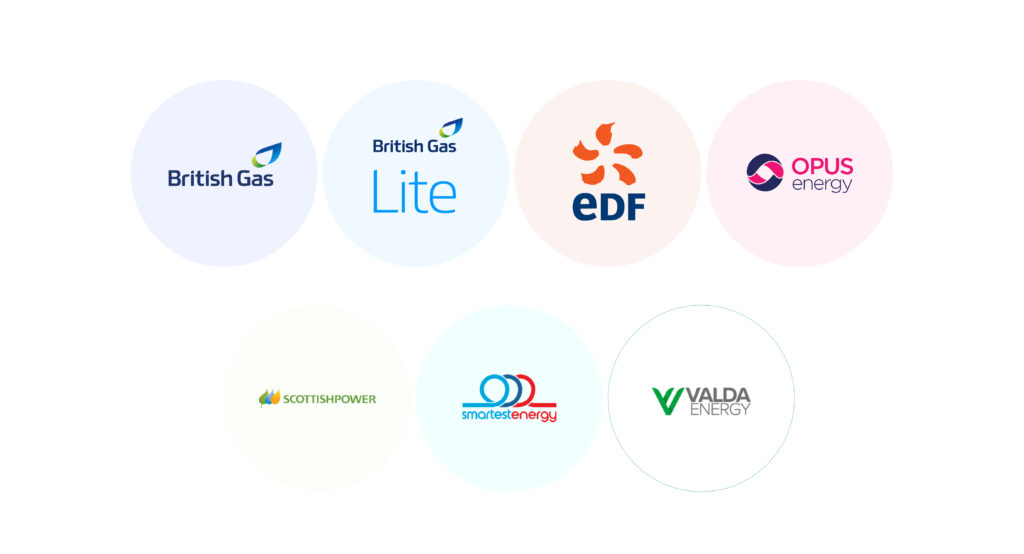
We will take a look at the unit rates and standing charges of some commercial electricity suppliers. Note that when comparing business electricity prices, you will receive quotes for both the unit rate and a standing charge. The unit rate is calculated in pence per kWh and represents what you’re charged for each unit of electricity consumed by your business. The standing charge is a daily fixed amount you pay to your supplier for maintenance of the supply network.

The table below shows the most recent business electricity unit rates and standing charges from a variety of suppliers. These prices are valid as of April 2024 and are based on 25,000 kWh of usage per year for a contract period of two years.

Different Suppliers and Their Unit Price Per kilowatt-hour


Electricity

Supplier

Unit Price per kWh

Standing

charge

British Gas29.4p62p
British Gas Lite29.4p62p
Smartest Energy26.1p63.1p
Scottish Power23p125p
EDF24.9p50p
Valda24.6p66.1p
Opus Energy22.9p195.9p


Commercial electricity rates have a significant impact on business operational costs and their ability to stay competitive. Understanding how these rates are calculated, the factors that influence them, and how to effectively manage electricity costs is critical for business owners and managers.

Businesses can reduce the impact of rising costs of electricity by staying informed about market trends, exploring tariff options, investing in energy-efficient technologies, and implementing smart energy management practices.

commercial electricity rates

What are Commercial Electricity Tariffs?
Understanding Commercial Electricity Rates
Factors Influencing Commercial Electricity Rates
Factors that Influence the Unit Price of Business Electricity Per kWh
Commercial Electricity Contracts/Tariffs
Strategies for Managing Commercial Electricity Rates
Different Suppliers and Their Unit Price Per kilowatt-hour

Compare Broadband deals with Docalla

Check offers

Compare Broadband, Mobile and SIM deals with Docalla

Broadband Deals
Mobile Deals
SIM Only Deals
What is a Multi-Site Metre?

A multi-site metre is a type of metre used by businesses with multiple locations, this enables them to manage their billing system and electricity usage.

What is a Half-Hourly Metre?

Half-hourly metres are usually the best option for businesses that consume a large amount of electricity. This is because the readings are more accurate as they are taken every 30 minutes and sent to the supplier, that way, you only pay for what you consume.

To install and maintain a half-hourly metre, you require a Metre Operator Agreement. Half-hourly metres are mandated by the government for large companies with a usage of 100kWh or more within a 30 minutes period. 

Are business electricity rates cheaper at night?

Most suppliers charge less for electricity consumed during off-peak hours, usually after 6pm. For a business to benefit from the off-peak rates, they must have one of the following metre types that can be used to measure consumption at different times in the day:

  • Smart electricity metre
  • Half-hourly metre
  • Two-rate metre
  • Three-rate metre (supports evening, night, and weekend tariffs)
Do commercial electricity rates vary by region?

Yes, commercial electricity rates vary and are dependent on the location of your property in the country. Britain has six distribution network operators (DNOs), each of which manages its own local network of cables, substations, and transformers. Business electricity rates include distribution costs charged by the local DNO. Some are pricier than others, so commercial electricity rates do vary by region.

Can I switch electricity suppliers?

Yes, you can switch electricity suppliers if the services of your current supplier is unsatisfactory or do not meet your energy needs adequately. It usually takes about 5 working days to switch.

Will my electricity supply be cut off when I switch?

No, your electricity supply will not be lost when you switch, your previous supplier will liaise with your new supplier to ensure that the process is seamless and that your business does not suffer any downtimes. 

What is the average business electricity bill?

Business electricity tariffs are charged based on business classification, company size, location, and consumption. The average electricity bill for a business in the UK is £1,200 per year Businesses are classified as:

  • Micro business
  • Small business
  •  Medium business
  • Large business
Can I get a No Standing Charge Tariff?

Some suppliers do not have a no standing charge tariff, and while a no standing charge tariff may appear to be highly enticing, suppliers typically compensate by charging a higher unit rate. Businesses that consume a small amount of electricity or are only open a few days a week will benefit from this kind of tariff.

How much VAT is paid on commercial electricity rates?

For commercial electricity, a standard VAT rate of 20% is charged; however, some businesses may qualify for a VAT reduction. 

What is a Metre Point Administration Number (MPAN)?

The metre point administration number is a 21-digit number used to identify your electric metre, it is usually found on the metre and in your electricity bill, and it is a unique number assigned to every metre.

 What is the Climate Change Levy?

The climate change levy is a form of environmental tax levied on businesses in the UK to encourage them to adopt more energy efficient practices. Businesses are welcome to join the climate change agreement scheme in order to enjoy reduced rates.

What is P272 legislation?

The P272 legislation was introduced about 10 years ago, and its aim is to migrate all high consumption users to the half hourly metre. Implementation was carried out in phases and managed by the business energy regulator, Ofgem, for businesses in profile classes 5 to 8.

How do I find out my business profile class?

To find out your profile class on your electricity metre, look at your metre point administration number and the box on the right side of the ‘S’. The number there is your profile class number.

Compare broadband deal, Save cost

Search for free

Sky Broadband

£45.90/month

Unlimited minutes

12 months of 500 GB data

12 months

Contract length
£30.9 upfront cost

250 mbps Total Cost

Unlimited Text

Visit Now
More details

Sky Broadband

£45.90/month

Unlimited minutes

12 months of 500 GB data

12 months

Contract length
£30.9 upfront cost

250 mbps Total Cost

Unlimited Text

Visit Now
More details

Sky Broadband

Offer ends 30th Jan. 2023

£45.90/month

Unlimited minutes

12 months of 500 GB data

12 months

Contract length
£30.9 upfront cost

250 mbps Total Cost

Unlimited Text

Visit Now
More details

Sky Broadband

Offer ends 30th Jan. 2023

£45.90/month

Unlimited minutes

12 months of 500 GB data

12 months

Contract length
£30.9 upfront cost

250 mbps Total Cost

Unlimited Text

Visit Now
More details

Compare broadband deal, Save cost

Search for free

Sky Broadband

£45.90/month

Unlimited minutes

12 months of 500 GB data

12 months

Contract length
£30.9 upfront cost

250 mbps Total Cost

Unlimited Text

Visit Now
More details

Sky Broadband

£45.90/month

Unlimited minutes

12 months of 500 GB data

12 months

Contract length
£30.9 upfront cost

250 mbps Total Cost

Unlimited Text

Visit Now
More details

Sky Broadband

Offer ends 30th Jan. 2023

£45.90/month

Unlimited minutes

12 months of 500 GB data

12 months

Contract length
£30.9 upfront cost

250 mbps Total Cost

Unlimited Text

Visit Now
More details

Sky Broadband

Offer ends 30th Jan. 2023

£45.90/month

Unlimited minutes

12 months of 500 GB data

12 months

Contract length
£30.9 upfront cost

250 mbps Total Cost

Unlimited Text

Visit Now
More details

Compare broadband deal, Save cost

Search for free

Compare broadband deal, Save cost

Search for free

Docalla makes accessing home services
easy for you

Online Booking

You can easily check the availability of a service, get an estimate, and book online. You will be able to track the progress of your service provider on the scheduled day.

Easy & Flexible Schedule

Easily handle all of your bookings in one convenient place! Whether you need to reschedule, make new bookings, or plan future services

Trusted Professionals

The service providers we collaborate with in Docalla are thoroughly screened and highly skilled. They will ensure that you receive high quality service.

Explore the world with ease!

Book your flight, hotels, and car hire in one place and make your travels hassle-free.


Tips and Guides

Explore the valuable tips and resources designed specifically for enhancing your knowledge.

beauty

How to Get Lash Extensions: Types, Care & Natural Look

How to Get Lash Extensions: Types, Care & Natural Look

June 18, 2024
handy service

Tips on assembling home furniture

Tips on assembling home furniture Hello there! As a marketing

June 22, 2024
The Role of Wireless Broadband in Enhancing Productivity for Small Businesses
utilities

The Role of Wireless Broadband in Enhancing Productivity for Small Businesses

Staying connected is critical for small businesses if they want

February 3, 2025
What to look out for when making hotel bookings for a romantic getaway
Travel

What to Look out for When Making Hotel Bookings for Romantic Getaways

  Couples need to escape from the rigours of everyday

December 8, 2024
Visit our Blog
X-twitter Linkedin Facebook Instagram
Popular Products
Beauty
  • Nail Polish
  • Inner Buttocks Wax
  • Hollywood Wax
  • Underarm Wax
  • Men’s Arm Wax
  • Back Waxing (Men)
  • Natural Lash Extension
  • Radiance Facial
  • Full Leg Waxing
  • Brazilian Waxing
  • Eyebrow’s Waxing(Women)
Handy Services
  • Delivery Services
  • Cleaning Services
  • Hairdresser Services
  • Massage Services
  • Plumbing Services
Gifting
utilities
  • Broadband
  • Unlimited Deals
  • Broadband Only Deals
  • Mobile Phones
  • Affordable Phones
  • Business Mobile
  • Gas & Electricity
  • Energy Price Comparison
  • Business Electricity
Travel
  • Flights
  • Hotels
  • Car Hire
Help & Information
  • FAQs
  • Blog
  • Reviews
  • About us
  • Partner with us

© 2026 Do!Calla, All rights reserved.

More Details

Sky Broadband

Offer ends 30th Jan. 2023

£45.90/month

Unlimited minutes

12 months of 500 GB data

12 months

Contract length
£30.9 upfront cost

250 mbps Total Cost

Unlimited Text

Buy Now

Monthly costs

£45.9 p/m

Months 1-18

£26.50

Thereafter

£44.00

Contract length

12 Months

Setup costs

£5.90

Discount Amount

£100.00

Average monthly cost

£36.90

Total contract costs

£477.00

Includes all upfront costs as well as your monthly payments.

Total contract cost (includes all upfront costs as well as £100.00 cashback/bill credit/voucher)

£477.00

Includes all upfront costs as well as your monthly payments. Cashback/bill credit/voucher has been deducted.

Average monthly cost during contract (includes all upfront costs as well as £100.00
cashback/bill credit/voucher)

£477.00

Speed

Download

50 Mb (average)

Average speeds are based on the download speeds that at least 50% of customers get at peak time. Remember that this is a rough guide – you may see higher or lower speeds than those listed here.

Upload

9 Mb (average)

Average speeds are based on upload speeds that at least 50% of customers get at peak time. The faster the upload speed, the quicker it will be to do things like send emails and post photos / videos to the web.

Other Details

Usage Limit

50 Mb (average)

“Truly unlimited” broadband is perfect for heavy downloaders, student households or families sharing their connection because it does not apply either a fair usage policy or traffic management. This lets you download as much as you want, whenever you want, with your broadband speed acting as the only restricting factor. Some packages offer “unlimited broadband” without a fair usage policy but with traffic management to make sure that very heavy downloaders do not affect your connection at peak times.